
The US Chip Dilemma: Balancing Tariffs and Global Supply Chains
2025-05-28
In recent years, the U.S. government has been committed to bringing chip manufacturing back to the United States in order to enhance its competitiveness and supply chain autonomy in the global technology sector. In 2023, TSMC announced a $12 billion investment in a wafer fab in Arizona, which is one of the largest single foreign direct investments in U.S. history. Micron also plans to invest $140 billion over the next 20 years to shift some of its production from Asia to the United States. However, these ambitious plans are facing dual challenges from tariff policies and trade restrictions.
The Impact of Tariff Policies on the Chip Industry
Although the U.S. government hopes to attract manufacturing back through tariff policies, chip manufacturers are concerned that this will bring a series of negative consequences. TSMC pointed out in its response to the U.S. Department of Commerce that imposing tariffs on imported chips and semiconductor manufacturing equipment will increase project costs and may even jeopardize the commercial viability of some projects. For example, the EUV lithography tools produced by the Dutch company ASML are indispensable for manufacturing advanced chips, with a unit price as high as $380 million. If the United States imposes high tariffs on ASML equipment, it will significantly increase production costs and weaken the competitiveness of the U.S. chip industry.
The Fragility of the Global Supply Chain
The U.S. chip industry is highly dependent on the global supply chain, especially raw materials and equipment from Asia. Currently, only 2% of global memory production is in the United States, and Micron plans to increase this proportion to 12%. However, even with such an expansion plan, the United States will still need to rely on the Asian supply chain. Micron has pointed out that the cost of building a factory in the United States is 35% - 45% higher than in Asia, and tariff policies will further widen this gap.
In addition, Qualcomm has also warned that imposing tariffs may harm the interests of U.S. chip design companies without creating corresponding economic benefits for the United States. Qualcomm relies on factories in Asia to produce most of its products, and imposing tariffs on semiconductors in the short term may weaken its competitiveness in the global market.
The Call from Chip Manufacturers
Faced with the uncertainty brought by tariff policies, chip manufacturers have called on the U.S. government to take more flexible and cautious measures. TSMC has suggested that the U.S. government exempt companies that have committed to semiconductor manufacturing projects in the United States from tariffs or other import restrictions. Intel has also emphasized that it is crucial to exempt tariffs on imported chips and semiconductor manufacturing equipment; otherwise, it will increase costs and weaken the competitiveness of U.S. manufacturers.
In addition, chip manufacturers have also called on the U.S. government to provide more incentives to support the repatriation of chip production. TSMC supports the Building American Semiconductor Investment Tax Credit Act (BASIC Act), which aims to increase the investment tax credit from 25% to 35% and extend it to 2030. Micron has also expressed support for the bill, believing that it will help alleviate the cost pressures faced by the U.S. chip industry.
The Negative Impact of Export Controls
In addition to tariff policies, the expansion of U.S. chip export controls may also harm the U.S. industry. The artificial intelligence chip designer Groq has called on the U.S. government to simplify export controls to support the U.S. artificial intelligence chip industry. Qualcomm has warned that export controls may lead to U.S. companies losing overseas markets, thereby weakening their position as a global technology leader.
Conclusion: Seeking Balance and Cooperation
The path to repatriating the U.S. chip industry is full of challenges. Although tariff policies and trade restrictions are intended to protect domestic industries, they may bring higher costs and supply chain instability. The calls from chip manufacturers indicate that the U.S. government needs to find a balance between repatriating manufacturing and maintaining the stability of the global supply chain. By providing more incentives and reducing unnecessary restrictions, the United States can better support the development of its chip industry while avoiding unnecessary impacts on the global semiconductor supply chain.
Semiconductor Distributors -- Semicone
Semicone distributor offer a wide range of semiconductor products, including popular IC models that cater to various applications. Here are some highly recommended IC models available through top distributors:
- MC68332ACEH16: A high-performance microcontroller with integrated memory and peripheral interfaces, ideal for embedded systems and industrial control applications.
- EP4CE6E22I7N: A compact FPGA with low power consumption, suitable for digital signal processing and communication systems.
- TPS259823ONRGET: A power management IC designed for high-efficiency power delivery, perfect for consumer electronics and portable devices.
Email: info@semicone.com
HP's Big Move: Production Line Leaving China, Raising Prices
In-Depth Analysis of ADI's Top 5 Popular IC Models
Related Article

Renesas raises prices again; new rates start Jan 1, 2027. Cost inflation and AI data center buildout boost power chip demand. Secure high-demand parts with SEMICONE.
Renesas Raises Prices Again This Year: New Prices Take Effect in 2027
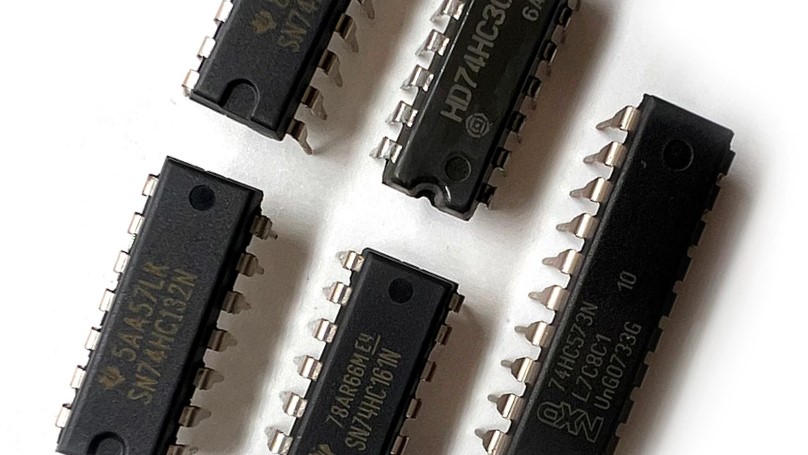
Why do 74-series logic ICs still matter? Spanning TTL to CMOS, this standardized family covers everything from decoders to bus buffers across 2–6V systems.
The 74 Series Logic ICs: A Detailed Guide and Selection Handbook