Tariff Policy New Dynamics: China's Tariff Adjustments on US Chips and Equipment
2025-04-25
In the current global trade landscape, the trade relationship between China and the US has always been a focal point for all parties, especially in the key field of semiconductor chips. Recently, rumors about China's tariff policies on some US chips and equipment have sparked extensive discussions within the industry.
According to the rumors, Chinese customs has issued an internal notice to exempt some US-made chips from tariffs. Specifically, only chips that have a storage function (with the HS CODE of 854232) will be subject to an additional 125% retaliatory tariff. Other types of chips, such as semiconductor-based transducers (code 85415129), semiconductor modules with current conversion functions (code 85423111), CPU superchips (code 85423119), monolithic integrated circuits (code 85423190), multielement integrated circuit amplifiers (code 85423310), other amplifiers (code 85423390), silicon crystal oscillators containing integrated circuits (code 85423910), and other integrated circuits (code 85423990), will no longer be subject to the additional 125% tariff.
In addition, some key semiconductor equipment, including chemical vapor deposition devices, physical vapor deposition devices, plasma dry etchers, ion implanters, and testing or inspection instruments and devices for semiconductor wafers or devices, as well as instruments for inspecting photomasks or gratings, are also on the exemption list.
Impact of the Origin Determination Rules
The "Urgent Notice on the Origin Determination Rules for Semiconductor Products" issued by the China Semiconductor Industry Associat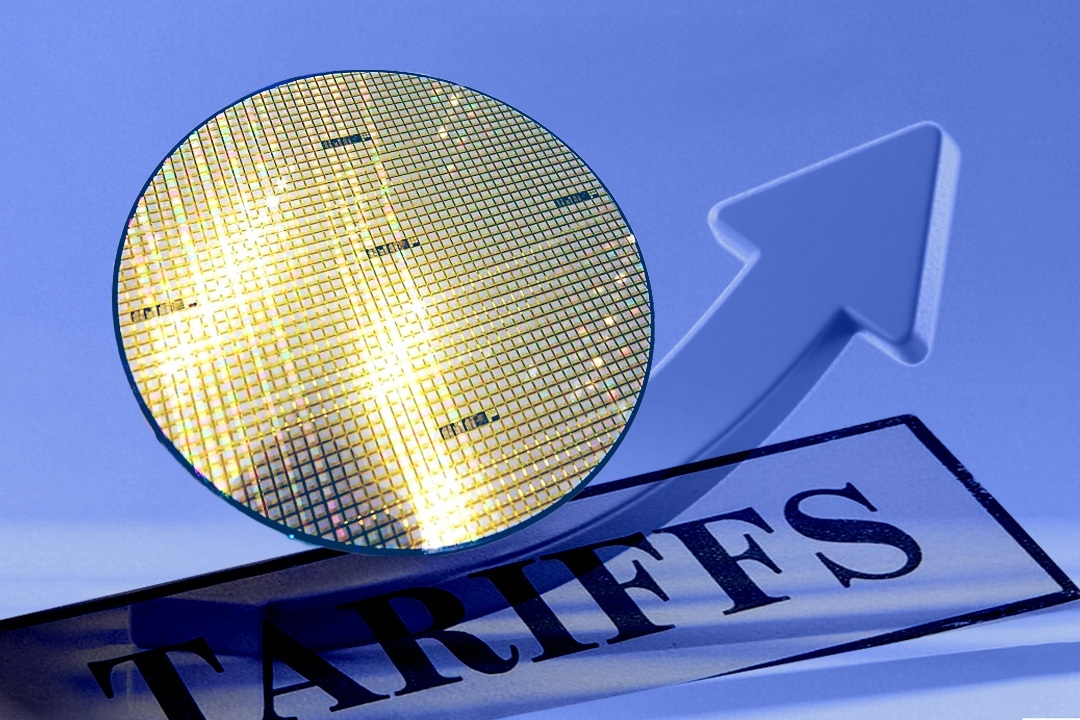 ion has provided an important basis for the implementation of the tariff policies. The notice stipulates that the origin of "integrated circuits" is determined according to the four-digit tariff code change principle, which means the place of wafer fabrication is recognized as the origin. This implies that if a chip is manufactured in the US through wafer fabrication, it will be subject to additional tariffs when imported. However, chips fabricated outside the US can avoid these tariffs. This rule has to some extent influenced companies' decisions on chip procurement and production.
Industry Reactions and Impacts
For related companies, the adjustment of this tariff policy has far-reaching impacts. On the one hand, for companies that rely on imported US chips, especially those involving the above-mentioned exempted tariff codes, the cost pressure is expected to be alleviated. They can more flexibly adjust their procurement strategies, optimize their supply chains, and reduce the additional costs caused by tariffs. On the other hand, for chip manufacturers, this policy may also prompt them to reassess their production layouts. Some companies that originally fabricated wafers in the US may consider transferring some production processes to other countries or regions to avoid tariff risks, thereby driving adjustments in the global semiconductor industry layout.
From a market perspective, this change in tariff policy may affect the supply and demand relationship in the global semiconductor market. For US chip companies, the exemption of tariffs on some products may enhance their competitiveness in the Chinese market to a certain extent and help stabilize their market share. However, for chip companies from other countries and regions, they also need to closely monitor this policy change and adjust their market strategies in a timely manner to cope with the potential intensification of market competition. In addition, for products such as storage ICs that are still subject to additional tariffs, their market supply and prices may be affected, which in turn will impact the production and sales of related electronic products.
Future Outlook
So far, the news of the exemption of tariffs on some US chips has not been officially confirmed, and there is still uncertainty about future developments. In the future, as the China-US trade negotiations continue to progress and the global semiconductor industry landscape keeps evolving, tariff policies may continue to be adjusted. For related companies and industry practitioners, keeping a close eye on policy dynamics and preparing in advance will be an important strategy to deal with future uncertainties.
Semicone IC Distributor
Semicone is a leading distributor of integrated circuits (ICs) and semiconductor components. We offer a wide range of high-quality IC products from different manufacturers. Stay informed with us for the latest IC models, competitive prices, and industry updates.
- The TI ISOW1412DFMR is a low-emissions, 500-kbps, reinforced isolated RS-485/RS-422 transceiver with integrated power, available in a 20-pin SOIC (DFM) package.
- The Microchip MCP73871-2CCI/ML is a highly integrated linear charger IC designed for single-cell lithium-ion batteries, featuring programmable charge current, system voltage regulation, and various protection functions, housed in a compact 28-pin QFN package.
- The PIC24FJ256GA106 is a 16-bit microcontroller featuring 256 KB of flash memory, 16 KB of RAM, and a wide range of peripherals including ADC, DAC, and communication interfaces, available in a 64-pin TQFP package, suitable for embedded applications requiring high performance and low power consumption.
Email: info@semicone.com
ST's Strategic Move in Edge AI: Acquisition of Deeplite
EU Issues First DMA Fine: Apple and Meta Penalized €700M
Related Article

Discover popular IC and power components for automotive and industrial systems, with SEMICONE supporting BOM matching, inventory sourcing and component procurement.
Hot-Selling IC Components: Automotive Electronics, Power and High-Performance Devices

Renesas raises prices again; new rates start Jan 1, 2027. Cost inflation and AI data center buildout boost power chip demand. Secure high-demand parts with SEMICONE.
Renesas Raises Prices Again This Year: New Prices Take Effect in 2027