NVIDIA Rubin GPU: Advancements in Process and Packaging Technologies
2025-03-26
In today's rapidly evolving AI landscape, GPUs as core computing components are gaining prominence. NVIDIA, a global leader in GPU manufacturing, has its new AI GPU product, Rubin, under the spotlight. According to reports, the Rubin GPU, slated for release in 2026, will incorporate cutting-edge technologies such as TSMC's N3P and N5B processes and SoIC advanced packaging.
N3P, N5B Process Node Design: Balancing Performance and Cost
The Rubin GPU features a multi-process node chiplet design. The compute chip uses TSMC's N3P process, representing top-tier semiconductor manufacturing. This process enhances performance while tightly controlling power, area, and TDP, making the compute chip more efficient. For I/O chips with lower PPA requirements, NVIDIA opts for the more economical N5B node. This mixed-process node design optimizes overall GPU performance and cost, ensuring high performance without compromising economic viability.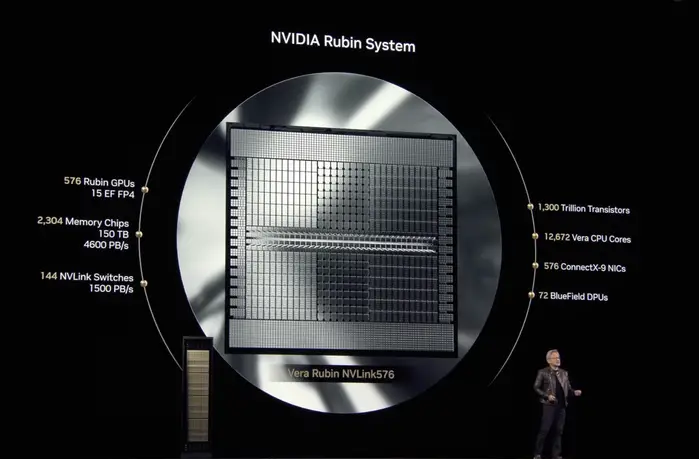
SoIC Packaging: Boosting Performance and Reliability
In terms of packaging, the Rubin GPU adopts SoIC (System on Integrated Chips) 3D vertical stacking. This technology integrates multiple processing cores, shortening signal transmission times and improving data processing efficiency. The SoIC packaging offers performance advantages and design flexibility. It allows for more compact product dimensions and enhances inter-chip connectivity, minimizing data exchange latency, making it suitable for complex AI computing environments.
CoWoS Process and HBM4 Memory: Enhancing Data Processing
Beyond SoIC packaging, the Rubin GPU uses CoWoS (Chip on Wafer on Substrate) to connect eight external 36GB HBM4 memory stacks. This design provides higher memory bandwidth and significantly boosts computing performance. The inclusion of HBM4 memory stacks further strengthens the Rubin GPU's data processing capabilities, enabling efficient handling of large-scale datasets, a major advantage for AI model training.
Production Capacity Support: Accelerating Market Introduction
Analysts predict TSMC's SoIC capacity will reach 15,000 to 20,000 wafers per month by late 2025 and double in 2026. This increased capacity will support NVIDIA and other chipmakers in accelerating new product launches and meeting market demands.
Market Impact and Future Outlook
The release of the Rubin GPU will solidify NVIDIA's leadership in high-performance computing. It will drive changes in AI GPU industry standards and propel advancements in autonomous driving, data analysis, and cloud computing. As more high-performance computing solutions emerge, future work models and technological development will be significantly influenced. The launch of NVIDIA's Rubin GPU marks a new era in computing. With advanced process and packaging technologies, the Rubin GPU achieves remarkable performance improvements and demonstrates strong advantages in cost control and data processing. As production capacity increases, this product is expected to achieve significant market success and inject new vitality into AI technology development.
Semicone IC Solutions
As a reliable supplier of high-performance integrated circuits, Semicone presents a wide range of first-class semiconductor components, catering to your design and production requirements. Our diverse stock allows you to quickly obtain the specific ICs needed. Be it for industrial, automotive, or consumer electronics fields, Semicone supports your projects with state-of-the-art semiconductor solutions.
- The Analog Devices LT3060IDC#TRPBF is a low-noise, low-dropout (LDO) linear regulator with programmable current limit and wide input voltage range, offered in a DFN package.
- The Texas Instruments INA156EA/250 is a precision, high-speed difference amplifier designed for accurate signal conditioning in industrial and instrumentation applications, offered in an SOIC-8 package.
- The MPS MP24833GN-Z is a high-efficiency, synchronous step-down DC-DC converter with a wide input voltage range, adjustable output, and integrated power MOSFETs, available in a compact QFN package.
Email: info@semicone.com
What is an Automotive-Grade MCU?
TSMC's 2nm Mass Production: Orders Accepted Next Month, Cost Reaches $30,000
Related Article

Renesas raises prices again; new rates start Jan 1, 2027. Cost inflation and AI data center buildout boost power chip demand. Secure high-demand parts with SEMICONE.
Renesas Raises Prices Again This Year: New Prices Take Effect in 2027
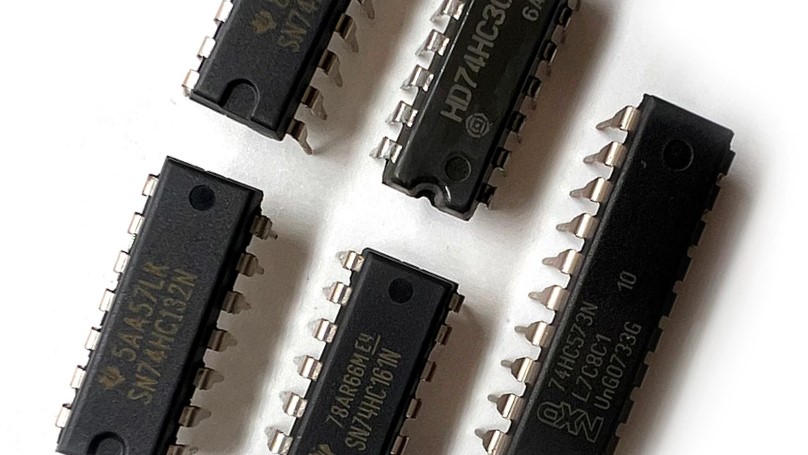
Why do 74-series logic ICs still matter? Spanning TTL to CMOS, this standardized family covers everything from decoders to bus buffers across 2–6V systems.
The 74 Series Logic ICs: A Detailed Guide and Selection Handbook