Transceiver ICs: Technology, Applications, and Market Analysis
2025-01-17
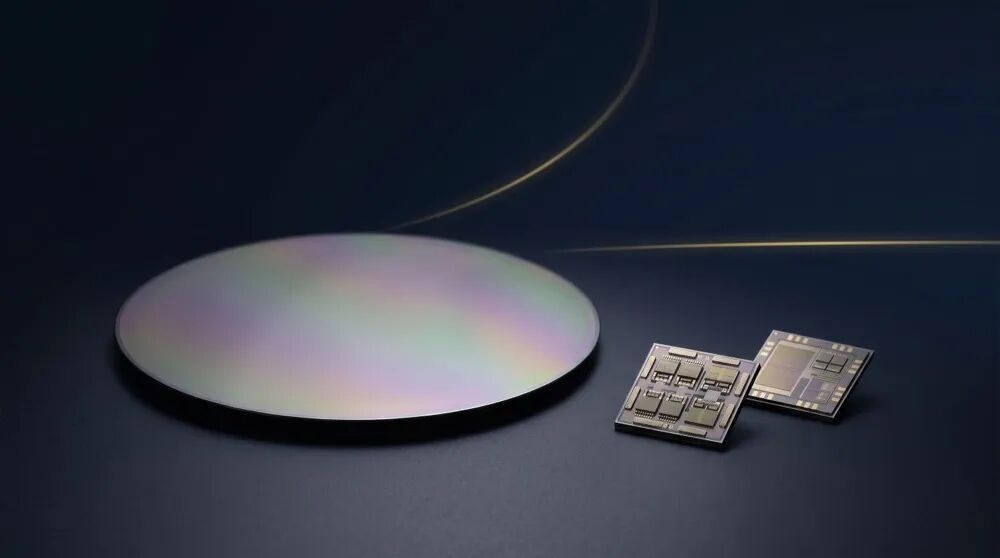
Transceiver chips are integrated chips that combine both transmission and reception functions, widely used in wireless and network communication devices. They integrate multiple modules such as RF transceivers, intermediate frequency amplifiers, digital signal processors, and clock chips, enabling the implementation of various communication protocols and standards, including WiFi, Bluetooth, Zigbee, LoRa, etc.
Architecture and Working Principle of Transceiver ICs
The architecture of transceiver chips mainly consists of two modes: reception and transmission. In reception mode, the chip first receives analog signals and processes them through the front-end module for filtering and amplification. Then, the analog signals are converted into digital signals via ADC and further processed through the digital signal processing module for filtering and demodulation. Finally, the digital signals are transmitted to other devices through the interface module. In transmission mode, the chip first receives digital signals from other devices through the interface module. Subsequently, the digital signals are modulated and filtered through the digital signal processing module and converted into analog signals. Lastly, the analog signals are amplified and filtered through DAC and the back-end module before being sent out via the RF transceiver.
Features and Applications of Transceiver Chips
The features of transceiver chips include high integration, high-speed transmission, low power consumption, high stability, and support for multiple communication standards and protocols.
- High Integration: Integrating multiple circuit modules to achieve multifunctional integration, reducing the space occupied on the circuit board.
- High-Speed Transmission: Capable of high-speed data transmission, supporting various communication standards and protocols, such as Ethernet, USB, HDMI, etc.
- Low Power Consumption: Employing advanced power management technology to minimize power consumption while ensuring high performance, thereby extending the usage time of devices.
- High Stability: Utilizing high-quality materials and manufacturing processes to provide stable and reliable data transmission, reducing signal loss and interference.
- Support for Multiple Interfaces: Capable of supporting various interface standards, enabling interconnection between different devices.
The applications of transceiver chips are extremely broad, covering mobile intelligent terminal devices, WiFi fields, automotive electronics, smart healthcare, industrial automation, as well as satellite communication and radar systems. In mobile intelligent terminal devices, they enable wireless communication and data transmission between devices; in the WiFi field, they are used for signal transmission and reception in wireless routers and network cards; in automotive electronics, they assist in-vehicle communication systems and autonomous driving assistance systems; in the smart healthcare field, they can be used for remote medical monitoring and medical image transmission devices; in industrial automation, they improve production efficiency and automation levels; in satellite communication and radar systems, they undertake the heavy responsibility of signal transmission and reception.
Selection of Transceiver ICs
- MCIMX6G2CVM05AB: From NXP's i.MX 6UltraLite series, it is an extended product of the i.MX 6 series, focusing on high performance and ultra-high efficiency, featuring an advanced single Arm® Cortex-A7® core with a running speed of up to 696MHz.
- DSPIC30F2010-30I/SP: A high-performance 16-bit digital signal controller (DSC) from Microchip, adopting an improved Harvard architecture, it has 83 basic instructions and flexible addressing modes, supports oscillator input from 12 kHz to 10 MHz, and can achieve a maximum operating speed of 30 MIPS.
- AD9361, ADRV9040: These are two Transceiver ICs from Analog Devices. AD9361 is a high-performance, highly integrated RF Agile Transceiver™ for 3G and 4G base station applications. ADRV9040 is the sixth-generation Transceiver product of ADI, supporting 8T8R and 4T4R configurations, suitable for 5G communication and cellular infrastructure applications.
- CMT2380F16: Integrating an 8-bit 80C51 CPU core and an ultra-low power RF transceiver, it is a high-performance, ultra-low power, (G)FSK, (G)MSK, and OOK RF transceiver chip suitable for wireless applications from 127 to 1020MHz.
- DP8392CV, DP8392CN: These chips from National Semiconductor are CTI coaxial transceiver interfaces.
Market Analysis of Transceiver Chips
From a market perspective, the global RF transceiver IC market reached a scale of $19.99 billion in 2023 and is expected to increase to $30.8 billion by 2032, with a compound annual growth rate of 4.92%. The main driving factors for market growth include the promotion of 5G networks, the increase of IoT devices, the growing demand for wireless connections, and the miniaturization of devices. The market is divided into single-chip and multi-chip RF transceiver ICs by type, mainly covers smartphones, tablets, laptops, etc. by application, and is primarily distributed in North America, Europe, Asia-Pacific regions, etc. In addition, major players such as Qualcomm Technologies, Broadcom, Skyworks, Qorvo, etc., strengthen their market positions and gain competitive advantages through strategic partnerships, mergers and acquisitions, product innovation, and capacity expansion. Market opportunities lie in the growth of emerging application fields and technological progress, while challenges include supply chain issues and technological complexity.
Opportunities and Future Trends of Transceiver Development
Looking to the future, transceiver chips will develop towards higher integration, better performance, wider applications, and stronger security. Higher integration will lead to smaller chip sizes, improved performance will support higher frequencies, lower power consumption, and faster data transmission rates, expanded applications will cover more emerging fields, and enhanced security will protect data transmission. Overall, as a key chip in communication, transceiver chips play an important role and have a broad prospect in promoting the development of the communication industry.
Email: info@semicone.com
In-depth Analysis of RTC Chip Accuracy in Embedded Systems
Semiconductor Giants Integrate Resources: Sales and Acquisitions to Address Competition and Change
Related Article

Resonac unveils Japan's first 12-inch SiC substrate, delivering 4x the chip output of 6-inch wafers. AI server cooling and AR waveguides are key targets.
Power Semiconductor Materials: Resonac's 12-Inch SiC Substrate
ITC launches 337-TA-1523 into DDR5 DRAM, targeting Micron, HPE, Lenovo, Supermicro over Netlist patents. Exclusion orders could block US imports.
ITC Opens Section 337 Investigation into DRAM: Sparked by Netlist