
UMC Wins Qualcomm's Major Advanced Packaging Order, Reshaping Competitive Market Landscape
2024-12-18
In recent years, competition in the semiconductor industry has intensified, with every technological innovation potentially triggering significant changes in the market landscape, especially in the field of advanced packaging. Traditional giant TSMC has long held a dominant position, but this pattern was recently broken by UMC. UMC successfully secured a substantial packaging order from Qualcomm, marking a significant breakthrough in the high-end packaging market.
Overview of the Global Chip Packaging Market
As chip design complexity continues to increase, advanced packaging technology has become a key factor in enhancing chip performance, reducing power consumption, and shortening product time-to-market. Traditional packaging methods have been unable to meet the market's demand for high performance and efficiency, while advanced packaging technology provides powerful support for chip performance improvement by shortening signal transmission distances between chips and increasing data transmission rates.
In the global chip packaging market, TSMC has long held a dominant position due to its technological and supply chain advantages. However, as market competition intensifies and technology continues to advance, other wafer fabs are actively seeking breakthroughs to establish a presence in the advanced packaging field.
UMC's Collaboration with Qualcomm
 It is reported that UMC's order from Qualcomm primarily involves advanced packaging for high-performance computing (HPC) products, expected to be applied in AI PCs, automotive, and AI server markets, and even include the integration of high-bandwidth memory (HBM). This collaboration not only marks a significant breakthrough for UMC in the field of advanced packaging but also brings new revenue growth opportunities.
In its collaboration with Qualcomm, UMC will adopt its innovative WoW Hybrid Bonding (hybrid bonding) process for packaging. This technology combines PoP packaging, replacing traditional solder ball bonding methods to shorten signal transmission distances between chips and enhance computing efficiency. Additionally, Qualcomm plans to adopt a semi-custom design tailored to its Oryon architecture, with TSMC handling advanced process manufacturing and UMC completing the advanced packaging. This collaboration model not only leverages the technical advantages of all parties but also demonstrates close cooperation and collaborative innovation among upstream and downstream enterprises in the industry chain.
After winning Qualcomm's major order, UMC further clarified its development direction in the field of advanced packaging. The company emphasizes that advanced packaging is one of its key focus areas for future development and will work with subsidiaries such as ISSI and Silicon Integration, as well as storage partner Winbond, to build an advanced packaging ecosystem. Through the construction of this ecosystem, UMC will better integrate resources, enhance overall competitiveness, and provide global customers with higher-quality and more efficient advanced packaging solutions.
Changes in Market Landscape and Future Trends
UMC's successful acquisition of Qualcomm's major order not only has a significant impact on its 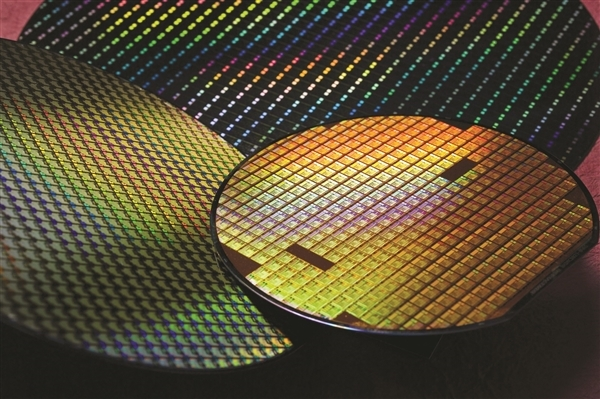 own development but also indicates that the global chip packaging market is poised to face a new competitive landscape. As technology continues to advance and market competition intensifies, other wafer fabs will also increase their investment and research and development efforts in the field of advanced packaging to secure more market share. In the future, advanced packaging technology will become one of the critical development directions in the semiconductor industry, and enterprises with technological strength and supply chain advantages will be more likely to take a leading position in this field.
Conclusion
UMC successfully won a large order from Qualcomm, which marks a major breakthrough in the field of advanced packaging, and also brings a new competitive landscape and development opportunities to the global chip packaging market. As technology continues to evolve and the market changes, we look forward to seeing more innovative technologies and outstanding enterprises emerge to jointly drive the sustained development and progress of the semiconductor industry.
Find Short Supply IC Chips
Semicon Electronics, an independent electronic component distributor, offers a wide range of chip resources so you can quickly find the IC chip models that are in short supply. Here are some of the recent hot semiconductor models.
-
The ME432AXG is a low-voltage, 1.25V programmable precision voltage regulator with an adjustable output voltage range of 1.25V to 18V, featuring a temperature coefficient of 30ppm/℃ and a precision of ±0.5%.
-
The REF5050IDR is a low-noise, low-drift, and high-precision voltage reference IC from Texas Instruments, offering a fixed 5V output with ±0.05% accuracy and 3ppm/°C temperature drift.
-
The SN65LVCP22PWR is a 2x2 LVDS crosspoint switch from Texas Instruments, designed to provide greater than 1000 Mbps operation for each path with wide common-mode receivers, suitable for high-speed digital signal routing applications.
Email: info@semicone.com
Understanding Comparator ICs: Principles, Applications, and Future Trends
Google Accelerates Production Shift: Vietnam Emerges As an Emerging Manufacturing Basea
Related Article

Broadcom is finalizing a $60B+ debt deal for AI chip funding, with subordinated tranches pushing totals near $100B.
Broadcom Plans to Raise Up to $100 Billion in Debt for AI Chip Financing

STMicroelectronics enacts third 2026 price hike (Aug 23), citing rising supply‑chain costs. Auto MCUs up 15‑20%, lead times stretch to 52 weeks.
ST Implements Third Price Hike This Year, Effective August 23