Current Sense Amplifier: A Complete Guide from Principles to Selection
2026-10-04
In applications such as battery management, motor drives, and power monitoring, accurate current measurement is directly related to system safety and efficiency. The current sense amplifier (CSA) is the key device for this task. By sensing the small voltage drop across a shunt resistor, it converts the current signal into a usable voltage output according to Ohm's law, enabling real-time current monitoring.
Operating Principle and Architecture Analysis
From the perspective of sensing location, CSA applications are divided into high-side and low-side schemes. High-side sensing places the shunt resistor between the power bus and the load. Its advantage is that it can directly monitor source current and offers strong immunity to ground-line interference, but the high common-mode voltage places higher voltage-withstand requirements on the device. Low-side sensing places the resistor between the load and ground. It is simple to implement and lower in cost, but cannot detect short-circuit faults from the load to ground. In addition, in PWM scenarios such as motor control, attention must also be paid to the device's ability to suppress rapid common-mode voltage transitions.
Selection Decisions and Featured Models
When choosing among many models, the following parameters must be carefully weighed:
1. Common-mode voltage range determines whether the device can adapt to the target system's bus voltage. Typical products cover -0.3 V to 26 V, -4 V to 80 V, and even wider ranges.
2. Offset voltage directly affects the accuracy of low-current sensing. Current advanced devices can reduce offset to the 10 µV level, enabling accurate measurement even when the full-scale voltage drop across the shunt resistor is as low as 10 mV.
3. Gain error and temperature drift reflect stability under temperature changes. High-quality CSAs can keep gain error within ±0.4% and gain drift below 10 ppm/°C.
4. Bandwidth determines whether the device can capture transient currents. For fast-response scenarios such as overcurrent protection, bandwidth at the 650 kHz or even 1.8 MHz level is more suitable.
After understanding the above parameters, the differences among selected devices can be quickly compared in the following table:
| Model | Common-Mode Range | Gain Options | Key Features |
| INA183 (TI) | 2.7 V–26 V | 50/100/200 V/V | Offset ±170 µV, gain error ±0.4% |
| INA21x series (TI) | -0.3 V–26 V | 50–1000 V/V (six options) | Zero-drift architecture, offset as low as ±35 µV |
| INA187 (TI) | -2 V–42 V | 20/50/100 V/V | 650 kHz bandwidth, bidirectional sensing |
| INA299 (TI) | -2 V–80 V | 20/50/100 V/V | AEC-Q100, suitable for high-voltage automotive applications |
| INA750x (TI) | -4 V–110 V | Integrated 800 µΩ shunt resistor | Enhanced PWM rejection |
| AD8412A (ADI) | -2 V–50 V | 10 V/V | 1.8 MHz bandwidth, CMRR 110 dB |
| TSC1801 (ST) | Low-side sensing | — | 2.0 V–5.5 V wide supply |
| BD142x (ROHM) | — | — | For automotive current sensing |
Different models have different emphases in voltage withstand, gain options, and response speed. During selection, the system bus voltage and sensing accuracy should be determined first, and then a trade-off should be made between gain and bandwidth. For example, high-voltage motor drives can prioritize the INA240 or INA299; low-side sensing in portable devices can focus on low-power solutions such as the TSC1801.
Conclusion
From the voltage-withstand capability of high-side sensing to the simplicity and cost-effectiveness of low-side solutions, and from microvolt-level offset optimization to megahertz-level bandwidth breakthroughs, the technological evolution of the current sense amplifier has always centered on balancing accuracy, speed, and reliability. Understanding common-mode range, gain accuracy, and temperature drift characteristics is the foundation for successful selection.
During the actual procurement stage, SEMICONE, as a distributor, can provide cross-brand current-sense model comparisons, small-batch samples, one-stop BOM kitting, and other services to help R&D teams transition more smoothly from selection to procurement and mass production.
Email: info@semicone.com
Power Semiconductor Materials: Resonac's 12-Inch SiC Substrate
Related Article
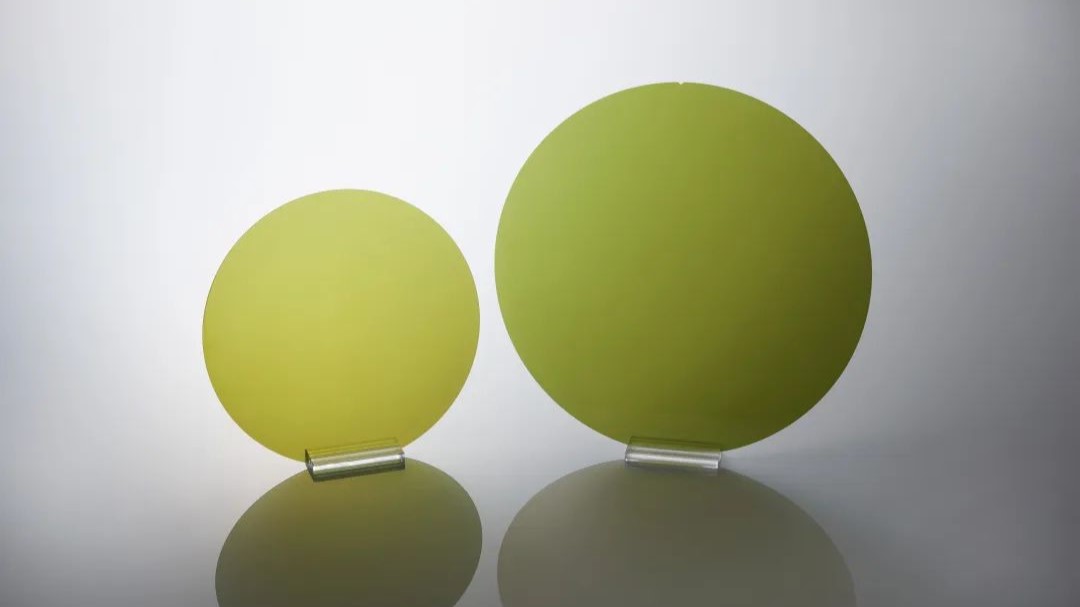
Resonac unveils Japan's first 12-inch SiC substrate, delivering 4x the chip output of 6-inch wafers. AI server cooling and AR waveguides are key targets.
Power Semiconductor Materials: Resonac's 12-Inch SiC Substrate
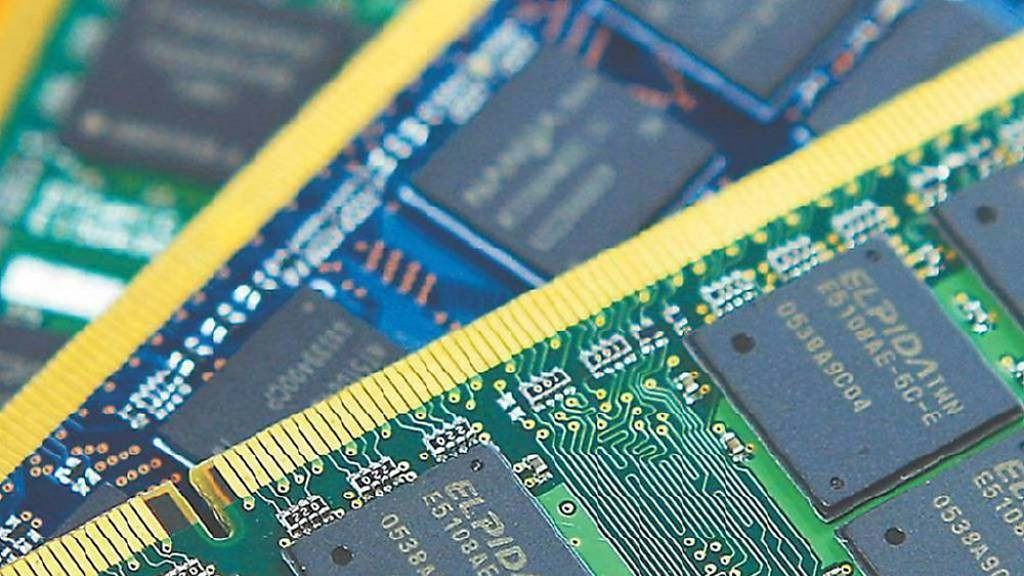
ITC launches 337-TA-1523 into DDR5 DRAM, targeting Micron, HPE, Lenovo, Supermicro over Netlist patents. Exclusion orders could block US imports.
ITC Opens Section 337 Investigation into DRAM: Sparked by Netlist