Ajinomoto Confirms ABF Price Hike, Tightening Supply for Key AI Chip Material
2026-05-12
In May, Japanese materials conglomerate Ajinomoto has confirmed that it will initiate a process to raise prices for its core semiconductor insulating material—Ajinomoto Build-up Film (ABF). This price increase will be implemented on a case-by-case, client-by-client basis, with adjustments made according to the specific circumstances of each customer. This decision will directly impact the packaging costs and supply chain for high-end chips worldwide, particularly AI chips.
Understanding ABF
Shareholder Pressure and Supply-Demand Imbalance
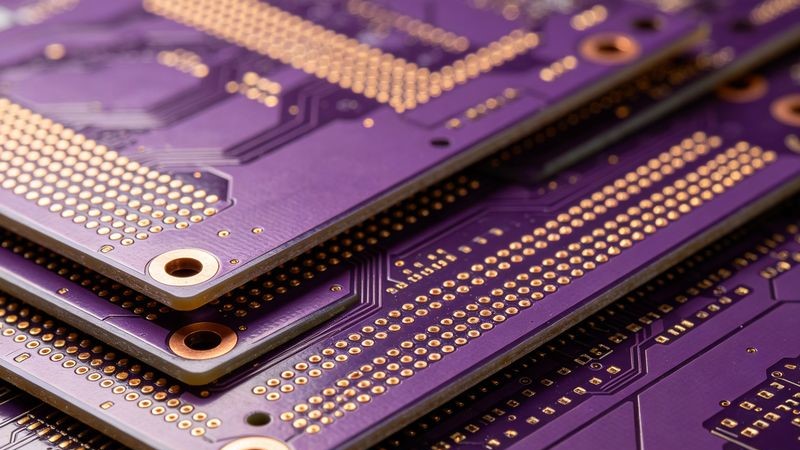
The immediate catalyst for this price hike comes from the capital markets. In late March 2026, Palliser Capital, a major shareholder and a UK-based investment fund, publicly urged the company to increase ABF prices by more than 30%. The more fundamental reason lies in a severe supply-demand imbalance. As AI accelerators like NVIDIA's Blackwell and Rubin undergo iterations, chip packaging complexity has surged dramatically. The number of required ABF layers has increased from 4-6 layers for typical PC chips to 8-16 layers or even more. This has led to exponential growth in ABF demand. Market forecasts predict that the supply-demand gap for ABF substrates will reach 10% in the second half of 2026, potentially widening to 21% in 2027 and 42% in 2028.
Production Capacity Outlook
To address the soaring demand, Ajinomoto plans to invest at least 250 billion yen by 2030 to increase its ABF production capacity by 50%. The company recently also announced plans to build a third ABF plant in Gifu Prefecture, Japan, scheduled to begin operations in 2032. However, given the double-digit annual growth in AI computing power, it remains a significant uncertainty whether a 50% increase in production capacity can adequately match the pace of demand growth.
Semicone Emergency IC and Discontinued Parts Supplier
As a professional distributor of electronic components in stock, Semicone focuses on providing solutions for global customers regarding scarce materials and one-stop purchasing services. Its services cover a wide range of integrated circuits from international brands to domestic brands, and can offer services for discontinued parts, urgent components, passive components, and alternative parts, helping customers solve problems related to tight delivery schedules and cost control. Today's popular in-stock, good-price chip parts are as follows.
● STB16NF06LT4: A N-channel power MOSFET launched by ST, with a 60V drain-source voltage and 16A continuous drain current.
● VNL5050N3TR-E: A single-chip full-protected low-side driver manufactured by ST based on VIPower technology, capable of driving up to 19A resistive or inductive loads.
● TPS79925DDCR: A low-dropout linear regulator from TI, featuring 40µA ultra-low quiescent current, high power supply rejection ratio, and a typical voltage difference of only 100mV.
● 5AGXMB5G6F35C6N: An Intel Arria V GX series FPGA, equipped with 420,000 logic units, 544 user I/Os, and 23.6Mb RAM.
● BLM15AG121SN1D: A 0402 size chip-type ferrite bead from Murata Manufacturing, providing 120Ω impedance at a 100MHz frequency and rated current of 550mA.
Email: info@semicone.com
TSMC and Applied Materials Join Forces to Break Through 3D Chip Bottlenecks
China's Chip Exports Double in First Four Months
Related Article

Nothing spins off CMF as an India-controlled company, retaining a stake amid market exits and memory hikes.
Nothing Spins Off Sub-Brand CMF

Amazon locks in up to $8B of Generac backup generators over 7 years as AI data center power demand surges.
Power Shortage: Amazon Locks In $8 Billion for Backup Generators