Intel's Path to Transformation: Layoffs and Strategic Adjustments
2024-07-31
Amidst the intensifying global semiconductor industry competition, Intel, as a leading enterprise in the field, is facing unprecedented challenges. Declining profits, loss of market share, and the rapid rise of competitors have forced Intel to undertake a series of profound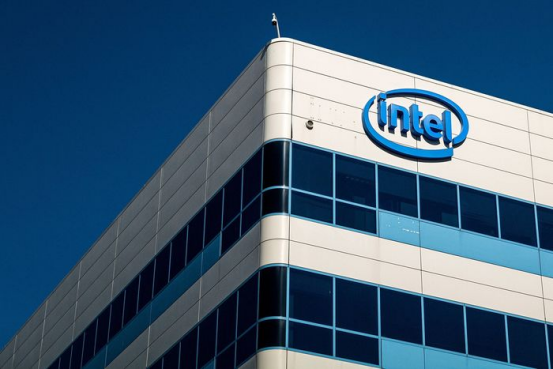 self-innovations and strategic adjustments. Among them, layoffs have become one of the key measures for Intel to reduce costs and improve efficiency.
Layoffs: The Reluctant Move to Cut Costs
On July 31, 2024, the latest reports indicated that Intel is planning another round of layoffs involving thousands of employees. Undoubtedly, this decision is a difficult one. Layoffs not only affect the livelihood of employees but are also crucial to the company's future development. The purpose of this layoff is to reduce costs and raise funds to escape the predicament of declining profits and market share loss. It is expected that by 2025, these cost-cutting measures will save the company up to 10 billion US dollars.
In recent years, facing a slowdown in market growth and financial pressure, Intel has been accelerating its strategy and has had to take this measure to reduce operating costs. Focusing on a variety of initiatives to reduce costs and improve efficiency, the company is raising funds for its transformation and recovery. The journey of layoffs began as early as October 2022 when Intel started to downsize mainly to address the slowdown in the PC market growth and the need to reduce costs. By May 2023, Intel once again announced layoffs, mainly due to the poor performance of the Client Computing Group (CCG) and the Data Center and AI Group (DCAI) in the financial reports for two consecutive quarters.
Technological Innovation: The Core of Maintaining Competitiveness
Technological innovation has always been the core strength of Intel. Faced with market challenges, Intel has increased its investment in R&D, committed to architectural innovation, and the expansion of product layout. For instance, Intel's processor design is moving from a monolithic architecture to a distributed design, adopting advanced packaging technology to enhance performance and energy efficiency.
Digital Transformation: Embracing the Trend of the Future
Digital transformation is another important direction for Intel's strategic adjustment. Intel has partnered with numerous industry partners to launch integrated software and hardware solutions centered on data, serving multiple fields such as retail, industry, transportation, etc. This has not only promoted the development of the digital economy but also opened up new growth opportunities for Intel.
Contract Manufacturing Business: Exploring New Market Territories
In the field of semiconductor contract manufacturing, Intel has also shown determination and action. By building new wafer fabs in the United States and launching a contract manufacturing innovation ecosystem fund, Intel is actively expanding its contract manufacturing business to meet diverse market demands.
Commercial PC Market: Promoting Digital Transformation
The commercial PC market is another focus of Intel's attention. Through technologies such as the vPro® platform, Intel has promoted the digital transformation of the commercial PC market, providing cloud-to-end solutions to help enterprises achieve more efficient and secure operations.
Conclusion
Intel's layoffs and strategic adjustments are inevitable choices for dealing with market challenges and regaining its leading position in the industry. Through technological innovation, digital transformation, environmental responsibility, expansion of contract manufacturing business, and development of the commercial PC market, Intel is showing its determination for transformation and profound planning for the future. Although the road is full of challenges, Intel is actively embracing the new opportunities of the digital age.
Trending Semiconductor IC Components
|
ARM Cortex-M3 Microcontroller by NXP Semiconductor
Designed for embedded applications, up to 100 MHz operating frequency.
Features 256 kB of flash memory and 64 kB of SRAM, includes a USB interface.
Suitable for applications such as electronic metering, lighting, industrial networking, alarm systems, major household appliances, and motor control.
|
|
|
Current sensor IC from Allegro MicroSystems
Offers a bandwidth of 1MHz with a fast response time of 210ns.
A high 1 MHz bandwidth analog output.
Designed for high-frequency switching applications and suitable for AC or DC current detection in automotive, industrial, commercial, and telecommunications systems.
|
|
|
Image sensor developed by ON Semiconductor
A 2-megapixel CCD image sensor with a 2/3" optical format
Equipped with dynamic range and a flexible readout architecture
Electronic shuttering and anti-blooming features
Low dark current and high charge transfer efficiency
Suitable for a wide range of applications, such as: Industrial imaging and machine vision, Security and surveillance systems, Medical imaging equipment and High-end consumer electronics.
|
Email: info@semicone.com
Samsung Q2 Earnings Highlights: Operating Profit Surged 15 Times
Algorithm Processors: The Key to Optimizing Energy Storage Charging
Related Article

SEMICONE CHIPs curates in-demand ICs across MCUs, PMICs, discretes, clock & audio — backed by in-stock inventory, genuine, samples and obsolete-part sourcing.
SEMICONE CHIPs: Guide to Popular IC Solutions
Solidigm seeks a $45B US NAND fab but ties it to approval for Dalian equipment upgrades, as export controls and a paused IPO constrain funding.
Talks on $45 Billion Investment: A Potential New US NAND Plant