
Thermal Management Strategies for High-Performance PMIC Chips
2025-02-28
With the continuous improvement of electronic device performance, the thermal management challenges for Power Management Integrated Circuit (PMIC) chips under high-power conditions are becoming increasingly prominent. Effective thermal management not only enhances the performance and reliability of chips but also extends the lifespan of devices. As the core power management unit in electronic devices, PMIC chips are responsible for voltage conversion, power distribution, and thermal management. Under high-power conditions, PMIC chips generate a significant amount of heat. If not effectively dissipated, this heat can lead to decreased chip performance, shortened lifespan, and even damage. Therefore, thermal management is crucial in PMIC chip design, as it monitors temperature in real-time and dynamically adjusts the operating state to ensure the device operates within a safe temperature range.
Existing Thermal Management Technologies
Hardware cooling design is the foundation of thermal management for PMIC chips, primarily involving the application of cooling components such as heat sinks, fans, and heat pipes. For example, the MT6357 PMIC integrates a thermistor to monitor temperature in real-time and adjusts its operating mode to reduce heat generation when the temperature exceeds a threshold. Additionally, some research teams have developed embedded microfluidic cooling technology, which designs cooling channels within the chip to significantly enhance heat conduction efficiency.
Software cooling control regulates heat generation by dynamically adjusting the device's operating frequency and voltage. For instance, the MT6357 PMIC supports multiple operating modes, including sleep mode and active mode, which can be dynamically switched based on device load requirements to achieve effective thermal control.
Thermal interface materials (TIM) are used to reduce the thermal resistance between the chip and the heat sink, thereby improving cooling efficiency. Common TIMs include thermal grease and thermal pads. Optimizing the thermal conductivity of these materials can effectively enhance the chip's cooling performance.
Innovative Thermal Management Solutions
- Microchannel Cooling Technology
Microchannel cooling technology designs precise cooling channels within the chip to introduce coolant into the core area, significantly enhancing heat conduction efficiency. For example, a team led by Professor Wang Wei from Peking University proposed a double "H" manifold embedded microchannel cooling solution. Experiments have shown that this solution can achieve a heat flux density of over 1200 W/cm², with an average temperature rise of less than 60°C.
- Phase-Change and Immersion Cooling
Phase-change cooling leverages the property of substances to absorb or release a large amount of heat during phase transitions, enabling efficient thermal management. Immersion cooling, on the other hand, submerges the chip directly in a coolant to provide an efficient and uniform cooling environment. These technologies have shown great potential in the thermal management of high-computing-power chips.
- 3D Conformal Heat Pipe Technology
A team led by Professor Zhou Wei from Xiamen University developed 3D conformal heat pipe technology, which introduces reverse engineering and data-driven 3D thermal packaging techniques to achieve customized cooling for complex-shaped electronic devices. This technology significantly reduces device temperature and increases the heat transfer limit.
- Intelligent Thermal Management Systems
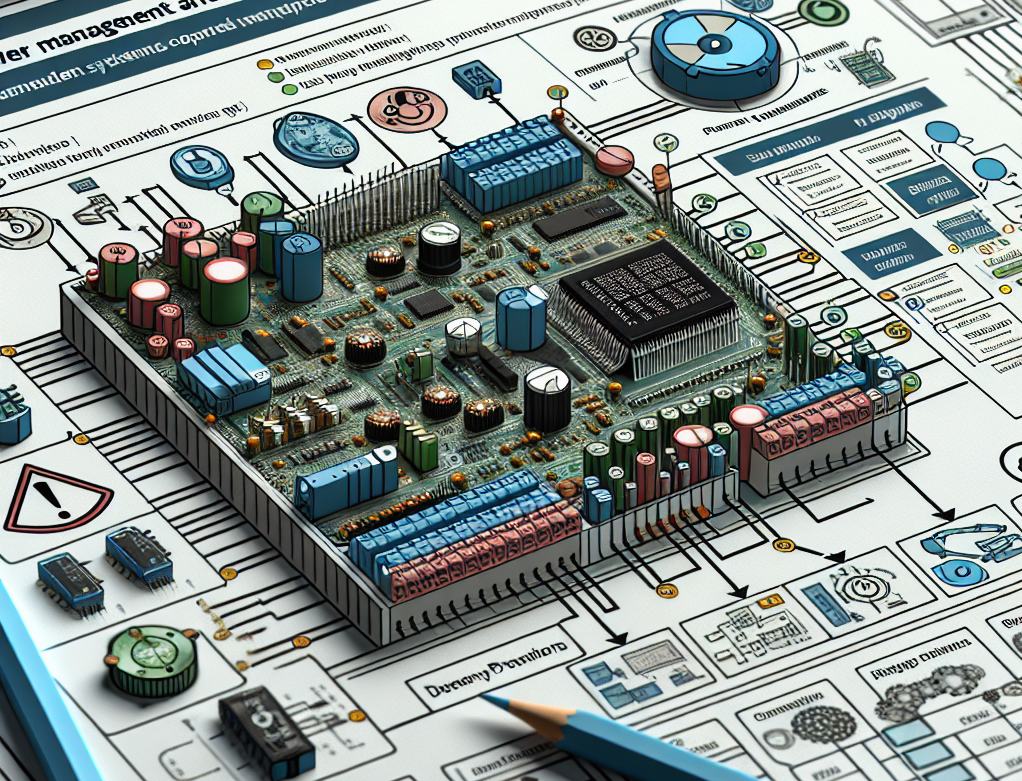
Intelligent thermal management systems, combined with AI technology, can monitor the temperature distribution of chips in real-time and optimize cooling strategies through machine learning algorithms. For example, Cadence's Celsius Studio tool shortens product development cycles and enhances chip cooling performance through early thermal analysis.
 PMIC's Thermal Management Future Development Trends
With the rapid development of AI and emerging technologies, thermal management for PMIC chips will face higher demands. In the future, thermal management technologies will evolve towards higher efficiency and greater intelligence. For example, the application of new high-thermal-conductivity materials, research on multiphysics coupling, and the development of intelligent cooling systems will become key areas of future research. Additionally, with the rise of Chiplet technology, achieving efficient thermal management in multi-chip integrated systems has become a new challenge. Combining advanced technologies such as microchannel cooling and phase-change cooling is expected to provide better thermal management solutions for high-computing-power Chiplets.
Popular PMIC Chips and Application Scenarios
With the diversification and high-performance requirements of electronic devices, the market demand for PMIC chips continues to grow. The following are some popular and highly regarded PMIC chips that have demonstrated excellent performance and innovative design in their respective application fields:
These chips are widely used in high-end smartphones and 5G devices, supporting multi-channel voltage output and dynamic voltage regulation. The built-in thermal management system ensures stable operation under high load.
- Texas Instruments (TI) TPS Series (e.g., TPS650861)
Designed for automotive electronics, these chips support a wide input voltage range and high-efficiency DC-DC conversion. The built-in thermal protection function ensures safe device operation.
- NVIDIA PEX Series
Designed for high-computing-power AI chips, these chips integrate microchannel cooling technology and intelligent temperature control algorithms, making them suitable for AI chips and data centers.
Designed for low-power IoT devices and wearables, these chips support dynamic voltage regulation and intelligent temperature control, significantly extending battery life.
- Analog Devices (ADI) LTC Series (e.g., LTC3374)
These chips offer high precision and reliability, making them suitable for high-precision application scenarios such as industrial automation and medical devices.
Highly integrated, these chips support multi-channel voltage output and dynamic frequency regulation, making them suitable for consumer electronics and smart home devices.
 Concluison
Thermal management of PMIC chips is a critical factor in ensuring the performance and reliability of electronic devices. Existing technologies, such as hardware cooling design, software cooling control, and thermal interface materials, have made significant progress but still face challenges posed by high power consumption and high heat density. Innovative solutions such as microchannel cooling, phase-change cooling, 3D conformal heat pipe technology, and intelligent thermal management systems provide new ideas and methods for future PMIC chip thermal management. As technology continues to advance, PMIC chip thermal management will become more efficient and intelligent, offering strong support for the high-performance operation of electronic devices.
Email: info@semicone.com
Infineon Sells Wafer Fab 25, Aiding SkyWater's Semiconductor Foundry
Unveiling the Link: DeepSeek Deployment and the Rise of High-Performance Chips
Related Article

Micron skips 10th-gen NAND, jumping from 276-layer G9 to 400+ layer G11 with wafer-to-wafer bonding, targeting AI and an H2 2027 ramp.
Node Selection: Micron Skips 10th-Generation NAND

A guide covers how clock generators work, eight representative ICs compared, sourcing pitfalls and where to buy.
Clock Generator: From PLL Fundamentals to Selection and Procurement