GM's Cruise: 50% Layoffs and a New Strategic Focus
2025-02-07
General Motors' (GM) autonomous driving subsidiary, Cruise, recently announced that it will cut approximately 50% of its workforce, including several senior executives such as CEO Marc Whitten, who are set to leave the company this week. This round of layoffs is part of GM's strategic adjustment in autonomous driving announced in December last year, as the company decides to abandon its Robotaxi business and focus instead on the development of personal autonomous vehicles.
Since acquiring Cruise in 2016, GM has invested around $10 billion in the development of autonomous driving taxis. However, Cruise has faced numerous challenges during its development, including the revocation of its operating license in October 2023 due to a major traffic accident, which led to a paralysis of its business across the United States. Additionally, the competition in the Robotaxi market has intensified, with competitors such as Google's Waymo and Tesla actively expanding their presence. GM believes that scaling up the Robotaxi business would require significant time and resources, hence the decision to adjust its strategy.
Layoff Details at Cruise
As of December 2024, Cruise employed nearly 2,300 people, and this round of layoffs is expected to affect over 1,100 employees. The company has pledged that all laid-off employees will continue to receive their salaries and benefits until the end of April and will be provided with eight weeks of severance pay, as well as additional compensation for long-term employees. Moreover, the company will offer three months of COBRA health insurance and a one-year LinkedIn Premium subscription to the affected employees to support their career transition.
Future Strategic Direction
GM has completed its full acquisition of Cruise, making it a wholly-owned subsidiary. Moving forward, Cruise's technology will be integrated into GM's Super Cruise hands-free driving system, which has already achieved hands-free operation capabilities and is currently available on more than 20 GM vehicle models. GM estimates that ending Cruise's Robotaxi development project will save up to $1 billion per year. Additionally, GM plans to merge the Cruise team with its own technology team to jointly advance the development of autonomous and assisted driving technologies.
Market Reaction and Outlook
GM's strategic adjustment has been well-received by the market, with its stock price rising by 2.2% in after-hours trading. GM CEO Mary Barra stated that Cruise, as an early innovator in the autonomous driving field, will help advance the vision of future transportation through its deeper integration with GM. However, Cruise's exit has also sparked further discussions within the industry about the feasibility of the Robotaxi business. Despite this, GM remains confident in the prospects of personal autonomous vehicles, expecting its Super Cruise technology to generate approximately $2 billion in annual revenue within five years. Going forward, GM will focus more on the development and promotion of personal autonomous vehicles to meet the increasingly fierce market competition and the ever-changing consumer demands.
Semicone Chip ICs -- Find and Contact
Semicone is a dedicated supplier of spot integrated chips, specializing in electronic IC semiconductors. Now pleased to share with you some recent popular IC components that could enhance your electronic design project.
◎ The STM32F042G6U6 is a 32-bit microcontroller from STMicroelectronics featuring a high-performance ARM® Cortex®-M0 core operating at up to 48 MHz, equipped with 32KB of flash memory, 6KB of SRAM, a 12-bit ADC, multiple timers, and a wide range of communication interfaces including USB, CAN, I2C, SPI, and USART.
◎ The NCP1117ST15T3G is a 1.0 A low-dropout (LDO) positive fixed voltage regulator from onsemi, featuring a maximum dropout voltage of 1.2 V at 800 mA, capable of providing an output current in excess of 1.0 A, with a nominal output voltage of 1.5 V.
◎ The ADRV9009BBCZ is a highly integrated, wideband RF transceiver from Analog Devices Inc., featuring dual RF transmitters, dual receivers, and an observation receiver with integrated synthesizers and digital signal processing capabilities. It operates within a frequency range of 75 MHz to 6 GHz, supports up to 200 MHz receiver bandwidth and 450 MHz transmitter synthesis bandwidth, and includes a fully integrated fractional-N RF synthesizer and clock generator, making it suitable for applications such as 3G/4G/5G TDD macro cell base stations, phased array radar, and portable test equipment.
◎ The M74VHC1GT32DFT1G is a high-speed CMOS 2-input OR gate from onsemi, featuring TTL-compatible input thresholds and a full 5V CMOS-level output swing. It operates within a voltage range of 3V to 5.5V, supports a propagation delay of 7.5 ns at 5V with 50pF load, and provides over-voltage tolerance up to 5.5V on inputs regardless of supply voltage. This makes it suitable for interfacing between different voltage level circuits and applications such as consumer electronics and industrial controls.
Email: info@semicone.com
South Korean Chip Giant Magnachip Seeks to be Sold Again
Toshiba Expands Arm® Cortex®-M4 Motor Control Microcontroller Lineup
Related Article
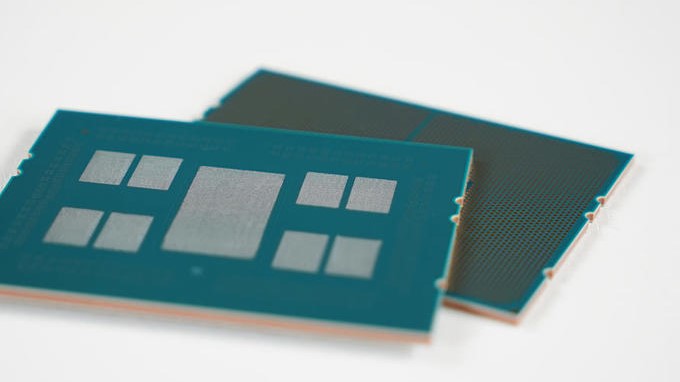
Samsung & Qualcomm develop organic-bridge 2.1D packaging, replacing silicon bridges to cut costs and avoid Intel EMIB patents.
Samsung Electro-Mechanics and Qualcomm Develop Organic-Bridge 2.1D Packaging

Discover popular IC and power components for automotive and industrial systems, with SEMICONE supporting BOM matching, inventory sourcing and component procurement.
Hot-Selling IC Components: Automotive Electronics, Power and High-Performance Devices