Google Accelerates Production Shift: Vietnam Emerges As an Emerging Manufacturing Basea
2024-12-17
Amidst the current global trade environment fraught with uncertainty, Google is accelerating the shift of its production from China to Vietnam to counter potential tariff threats from the United States and align with the "China+1" strategy adopted by many companies. This move not only signifies a significant change in Google's production strategy but also heralds Vietnam's rise in the global manufacturing industry.
Google's Production Shift Strategy
This strategic pivot by Google is in response to the trade tensions between China and the United States, aiming to reduce reliance on a single market. Industry insiders have revealed that Vietnam will be responsible for the assembly of Google's standard Pixel 10 models, as well as the Pro and XL variants. This decision is not only to mitigate the risk of tariffs but also to achieve a diversified layout in the global supply chain. According to Google's traditional release schedule, the Pixel 9a and Pixel 10 series have already been put into production in Vietnam, indicating a significant shift in Google's manufacturing approach. Previously, Google typically launched the Pixel A series in the first half of the year and flagship models in the second half. Now, Vietnam's production capabilities have become an important safeguard for the release of Google's new models.
Vietnam's Emerging Role
duction shift not only brings new opportunities for the company itself but also injects new vitality into the development of Vietnam's manufacturing industry. Vietnam's relatively low labor costs and the government's open attitude towards foreign investment have made it an emerging hotspot in global manufacturing. Moreover, Vietnam's manufacturing industry has developed rapidly in recent years, attracting a large number of foreign enterprises. Google's entry will further promote Vietnam's competitiveness in the high-tech manufacturing sector and enhance its position in the global supply chain.
At the same time, Google's cooperation with Vietnam is not limited to smartphone production but also includes in-depth collaboration in the field of artificial intelligence. Google is willing to cooperate with Vietnam in the development of artificial intelligence, jointly holding a symposium on "Building the Future of Artificial Intelligence in Vietnam," aiming to tap into Vietnam's potential in artificial intelligence development and exchange views on the policy mechanisms for Vietnam's AI development. In addition, Google plans to establish a "hyper-scale" data center in Vietnam, which will be its first such investment in the Southeast Asia region, further deepening Google's cooperation with Vietnam in digital transformation.
Adjustment of Global Supply Chains
Google's production shift is a microcosm of the adjustment of global supply chains. As the international trade environment changes, many multinational companies are reassessing their production and supply chain layouts to achieve diversification and flexibility. Vietnam, India, and other Southeast Asian countries are gradually becoming the new frontiers of global manufacturing.
Future Outlook
Google's production shift is not only a short-term strategy to cope with the current trade tensions but also a part of its global strategic layout. As the international trade environment changes, many multinational companies are reassessing their production and supply chain layouts to achieve diversification and flexibility. In the future, as Vietnam's manufacturing industry continues to develop and mature, it is expected that more multinational companies will choose to shift their production to Vietnam, thereby further promoting the country's economic growth.
In summary, Google's acceleration of production from China to Vietnam marks a significant change in the global manufacturing landscape. This move not only brings new opportunities and challenges for Google but also injects new impetus into Vietnam's economic development. As the global supply chain continues to adjust, the future manufacturing landscape will become more diversified and flexible.
Electronic IC Chip Supplier
Semicon Electronics provides a wide range of chip resources, allowing you to quickly find the IC model you need. Here are some popular models recently, and feel free to explore more IC models at Semicon.
- The SBD52C05L01 is a bidirectional electrostatic discharge (ESD) protection diode with a 5V reverse stand-off voltage, designed to protect against transient voltages in portable applications such as cell phones and notebooks.
- The SN65ALS176DR is a differential bus transceiver designed for bidirectional data communication on multipoint bus transmission lines, capable of operating at data rates up to 35 Mbaud, and featuring a wide common-mode voltage range and thermal shutdown protection.
- The STD110N8F6 is an N-channel MOSFET power transistor with a voltage rating of 80V and a continuous drain current of 80A, designed for high power switching and management applications in communication equipment, automotive electronics, industrial automation, and medical devices.
Email: info@semicone.com
UMC Wins Qualcomm's Major Advanced Packaging Order, Reshaping Competitive Market Landscape
Charging Management System Of Power Bank
Related Article
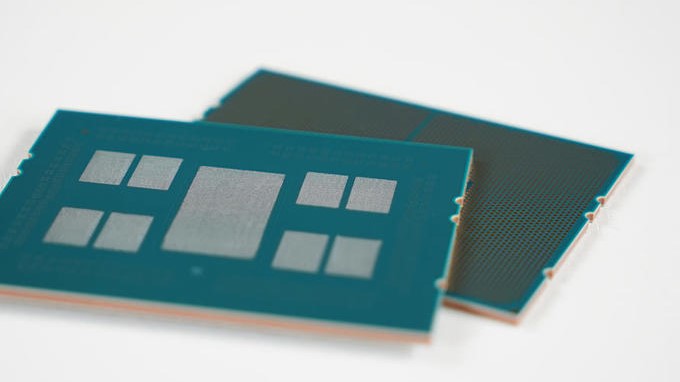
Samsung & Qualcomm develop organic-bridge 2.1D packaging, replacing silicon bridges to cut costs and avoid Intel EMIB patents.
Samsung Electro-Mechanics and Qualcomm Develop Organic-Bridge 2.1D Packaging

Discover popular IC and power components for automotive and industrial systems, with SEMICONE supporting BOM matching, inventory sourcing and component procurement.
Hot-Selling IC Components: Automotive Electronics, Power and High-Performance Devices