MLCC Price Spikes, Component Selection Playbooks
2026-05-28
The core driver behind this price surge is the explosive growth of AI computing infrastructure. A single high-end AI server may require 20,000 to 30,000 MLCCs—three to five times the amount needed for a standard server. NVIDIA's VR200 NVL72 server demands approximately 600,000 MLCCs, more than 30% above existing GB300 platforms. In response to robust AI demand, Japanese and Korean manufacturers are actively shifting capacity toward high-end MLCCs, causing a contraction in general-purpose production. In April 2026, Taiyo Yuden took the lead in raising prices by 6% to 13% on low-capacitance consumer and automotive-grade MLCCs, while Murata also increased prices by 15% to 35% for high-capacacity, automotive, and RF products targeting AI servers.
MLCC Structure and Classification
An MLCC is formed by alternately stacking layers of ceramic dielectric and metal inner electrodes, then sintering them into a monolithic structure. It offers excellent high-frequency characteristics, low equivalent series resistance (ESR), and high reliability. By dielectric characteristics, MLCCs are classified as:
● Class I (Temperature-Compensating Type): Represented by C0G/NP0, with a temperature coefficient of ±30 ppm/°C and extremely high capacitance stability, suitable for RF oscillation and precision timing circuits.
● Class II (High-Dielectric-Constant Type): Represented by X5R, X7R, and X6S, offering a wide capacitance range, suitable for power decoupling, filtering, and energy storage applications.
By package size, EIA standards span from 008004 (0.25 × 0.125 mm) to 2220 (5.7 × 5.0 mm). Among these, 0201, 0402, and 0603 are mainstream in consumer electronics, while 0805, 1206, and 1210 are more commonly used in power management.
Classic MLCC Series and Models
| Mfr | Series Positioning | Classic Series/Mode | Key Parameters | Typical Applications |
| Murata | General Consumer | GRM Series (e.g., GRM155R61A, GRM188R61E) | 0201–2220 packages, X5R/X7R, 0.1 µF–47 µF | Consumer electronics decoupling, communication equipment filtering |
| Automotive | GCM Series (e.g., GCM21BE71H106KE02) | World's first 0805-size 10 µF/50 V automotive-grade, AEC-Q200 | ADAS, 12 V bus, infotainment | |
| High Mechanical Stress | GRT Series (soft termination) | Flexible termination design, resistant to substrate bending | Engine compartments, high-vibration environments | |
| TDK | General Purpose | C Series (e.g., C1608, C3216 X7R) | Standard packages, 6.3 V–100 V, high reliability | Industrial power, communication equipment |
| Automotive High Voltage | CGA Series / MEGACAP | Metal-frame structure, 99 nF/1000 V (C0G), 47 µF/100 V | OBC, inverter snubber, wireless power transfer | |
| High-Capacity Record | 1608-size 100 V/1 µF X7R | Record capacitance for this voltage rating in the same package | 48 V intermediate bus, industrial power | |
| Taiyo Yuden | General Miniaturization | TMK Series (e.g., TMK212BBJ106KG-T) | 0402 package, 100 µF/16 V, high cost-performance | Smartphones, wearables |
| Ultra-Miniature | JMK Series (e.g., JMK105BJ105KVHF) | 0201/01005 packages, 1 µF/6.3 V | TWS earphones, high-density modules | |
| Automotive | AMK Series (e.g., AMK107, AMK212) | AEC-Q200 Grade 1, –55 °C to +125 °C | Body ECUs, domain controllers | |
| Mid-to-High Voltage Automotive | MCASU Series (e.g., MCASU32MAB7106KPNA01) | 1210 package, 10 µF/50 V, X7R | 48 V mild-hybrid systems, BMS auxiliary power |
Key Selection Criteria: From Parameter Matching to Supply Security
Against the current backdrop of tight supply, MLCC selection must balance electrical performance with supply-chain resilience:
1. Voltage Derating: The rated voltage should be 1.5 to 2 times the actual operating voltage. For example, a 48 V system should select products rated at 50 V or higher, with a margin of at least 20%.
2. Temperature Characteristic Matching: RF and precision circuits should prioritize C0G/NP0; general power decoupling should use X7R (–55 °C to +125 °C); cost-sensitive consumer electronics may select X5R (–55 °C to +85 °C).
3. Package and Capacitance Trade-off: Advanced-process modules should prioritize 0201/01005 to save PCB space; power input/output filtering may use 0805/1206 to achieve higher capacitance and lower ESR.
4. Automotive Certification: Automotive electronics must use products certified to AEC-Q200, with attention to soft-termination types (such as GRT or bracket-equipped HMK series) to withstand mechanical stress.
5. Supply Chain Strategy: Given that lead times for high-end MLCCs have extended to 20–24 weeks, it is advisable to establish long-term agreements (LTAs) or safety stock for high-capacitance, high-voltage, and automotive-grade models, avoiding reliance on a single supplier.
Conclusion
The 2026 MLCC market exhibits pronounced structural divergence. AI servers and new energy vehicles continue to absorb high-end capacity, driving prices upward for high-capacitance, high-voltage, and automotive-grade models. Meanwhile, although general consumer-grade products remain relatively stable in supply, cost pressures are building from both raw material price increases (silver, copper, tin) and capacity migration.
For design engineers and procurement decision-makers, thoroughly understanding the differences between Class I and Class II dielectric characteristics, mastering the application boundaries of core series such as Murata GRM/GCM/GRT, TDK CGA/MEGACAP, and Taiyo Yuden AMK/MCASU, and proactively planning supply-chain arrangements have become critical to navigating the current MLCC price surge cycle.
Email: info@semicone.com
Murata Manufacturing Invests 9.7 Billion Yen in New Tome Factory
Qualcomm and ByteDance Reach AI ASIC Chip Agreement
Related Article
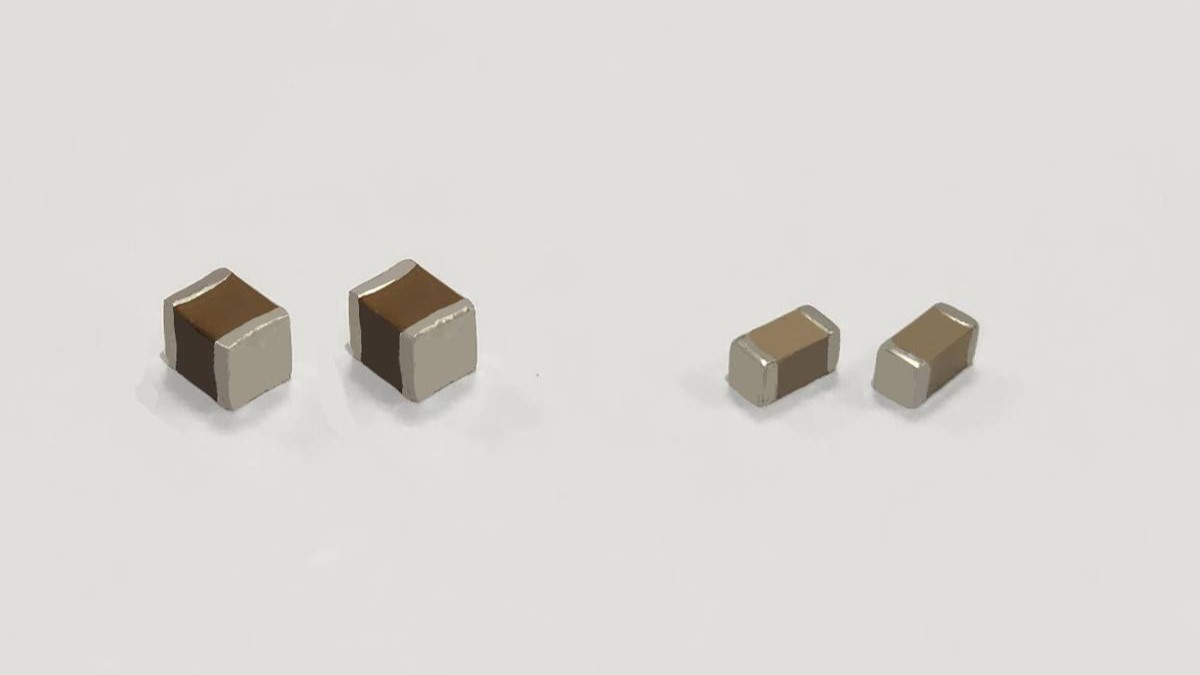
Samsung Electro-Mechanics secures record 1.07 trillion won AI server MLCC order, lifting 2027 LTA backlog past 3.3 trillion.
Samsung Electro-Mechanics Secures Largest-Ever MLCC Order
TI issues its fourth price hike in twelve months, with increases ranging 15%–85% on analog, MCU, and power management lines.
Analog Chip Leader TI Issues Another Price Increase Notice