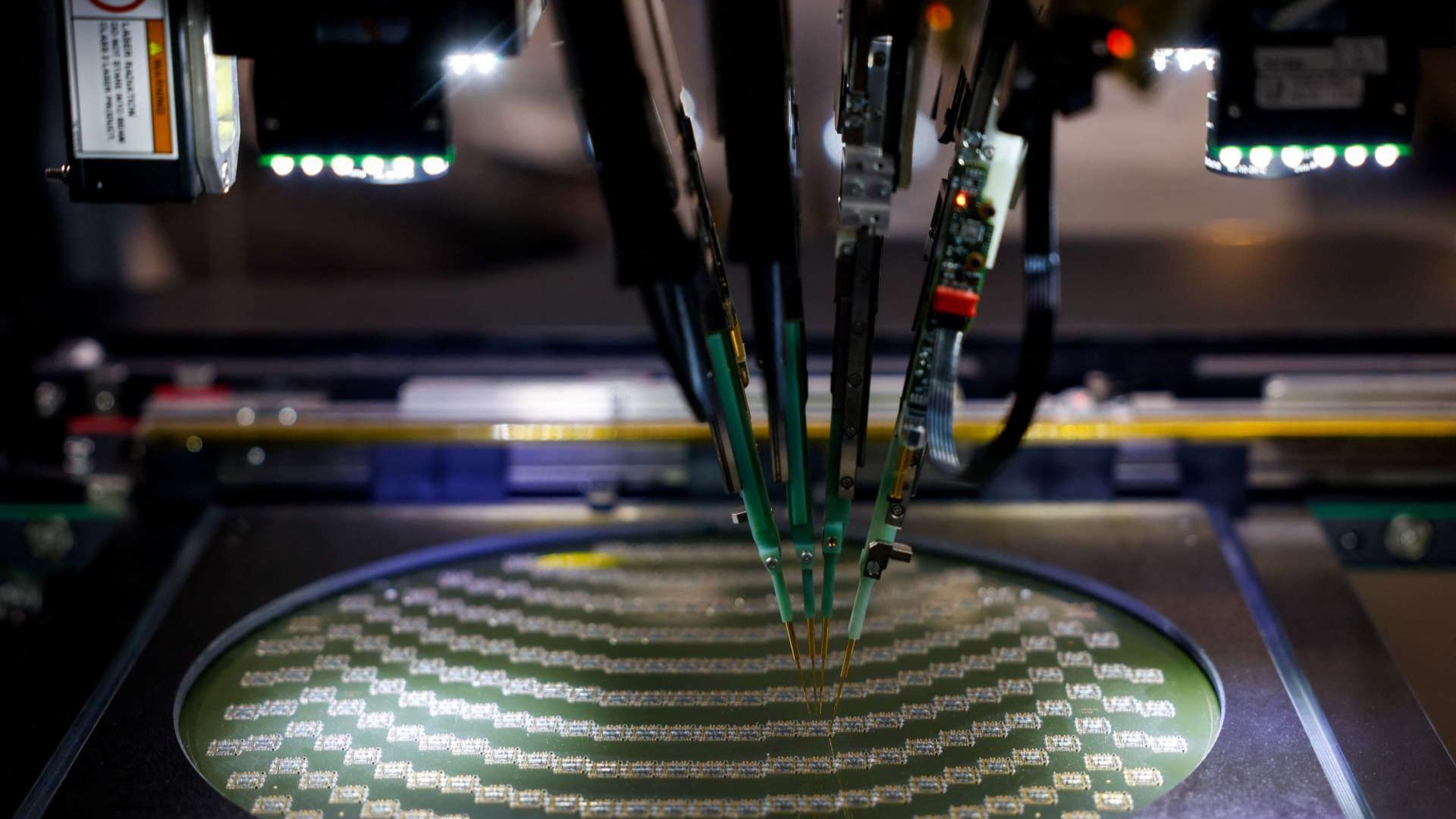
HP, Dell and Other PC Giants Consider Chinese Memory Chips for the First Time
2026-02-10
Amid persistent global memory chip supply constraints, the international PC industry is witnessing a historic turning point. According to reports, four major global PC manufacturers-HP, Dell, Acer, and ASUS-are for the first time considering adopting memory chips produced by Chinese chipmakers in their products.
Certification Progress: Differentiated Strategies
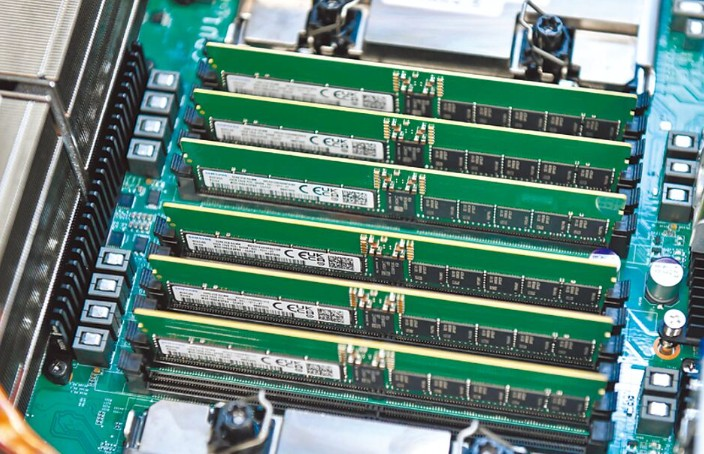 HP has taken the lead in initiating technical certification procedures for products from China's leading DRAM manufacturer, ChangXin Memory Technologies (CXMT). It is reported that HP plans to continuously monitor memory chip supply conditions until mid-2026. If DRAM supply remains tight and prices stay elevated at that time, HP will likely purchase CXMT chips for the first time, deploying them in PC products for non-US markets.
Similarly, driven by concerns that memory prices may continue to soar throughout 2026, Dell has also launched certification procedures for CXMT DRAM products. Much like HP, Dell's certification process aims to establish diversified procurement channels for supply security over the next 12 to 18 months, alleviating pressure from the current global memory chip supply crunch.
The two major PC brands from Taiwan, China have adopted more flexible strategies. Acer has indicated an open attitude if its Chinese contract manufacturers procure Chinese-made memory chips. ASUS has already requested its Chinese production partners to assist in procuring memory chips for certain laptop projects. This "OEM procurement" model reduces direct risks for brand manufacturers while providing an indirect pathway for Chinese memory chips to enter international supply chains.
Underlying Causes: Memory Chip Supply Imbalance
This collective shift by PC giants toward Chinese suppliers stems from structural imbalances in the global memory chip industry chain. As artificial intelligence (AI) infrastructure investment surges, the global memory chip "Big Three"-Micron, Samsung, and SK Hynix-are prioritizing core capacity allocation to AI giants such as NVIDIA, Google, and Amazon for the production of high-margin AI server chips like High Bandwidth Memory (HBM).
This has significantly squeezed traditional DRAM capacity for consumer electronics such as PCs and smartphones. According to industry analysis, data centers will consume over 70% of top-tier memory chips in 2026, while the PC market faces a dilemma of "orders without materials." Memory prices have skyrocketed since late 2024, exerting tremendous cost pressure on PC manufacturers whose profit margins are already under strain.
CXMT: Opportunity for Domestic Memory Suppliers
ChangXin Memory Technologies (CXMT), as the only IDM enterprise in mainland China with large-scale DRAM mass production capabilities, is encountering a historic opportunity. According to Omdia data, by shipment volume, CXMT has become China's number one and the world's fourth-largest DRAM manufacturer, with its global market share increasing to approximately 4% in Q2 2025, and surpassing 10% by wafer capacity. Technologically, CXMT's DDR5 products have achieved yield rates of 80%-85%, approaching the levels of international giants, with maximum speeds reaching 8000Mbps-fully capable of meeting PC product performance requirements. In terms of capacity, its monthly output has approached 300,000 wafers, with plans to increase to 450,000 wafers in 2026, providing solid support for large-scale supply.
Nevertheless, challenges remain. Industry assessments indicate CXMT still lags behind leading enterprises by 3-4 technology generations, and the lack of EUV lithography machines may limit its advancement to more sophisticated process nodes. The certification cycle typically lasts six months, serving as both a window for CXMT to demonstrate its reliability and a testing period for PC manufacturers to verify its stability.
Future Outlook
Although advancing certification processes does not necessarily mean these enterprises will ultimately adopt CXMT chips, this series of developments has been regarded by the industry as a strong market signal: under considerations of supply security and cost control, Chinese memory chip manufacturers are gradually transitioning from "alternatives" to "viable options."
Notably, the current memory chip shortage is not a short-term phenomenon and may persist until 2027 or even longer. PC manufacturers have notified customers to expect price increases of 15%-20% in the second half of 2026, with some manufacturers even beginning panic stockpiling. Against this backdrop, the rise of Chinese memory chips not only provides international PC manufacturers with an alternative solution but also injects new variables into the diversification of the global semiconductor supply chain.
Semicone Semiconductor Distributor
Semicone is an electronic component distributor specializing in providing one-stop IC procurement solutions. Semicone offers a wide range of products, covering storage chips, logic devices, power management ICs, microcontrollers (MCUs), FPGAs, and sensors, among others. Here are a few popular ic models.
● MX66L2G45GXRI00: Macronix's 2Gb high-performance NOR Flash memory, optimized for industrial embedded systems and firmware storage in network devices.
● TPS51200DRCR: Texas Instruments' DDR terminal voltage regulator, using a synchronous buck topology, is an ideal choice for memory power management in servers and communication equipment.
● W25Q32JVSSIQ: Winbond's 32Mb SPI NOR Flash memory, suitable for code and data storage in IoT devices, consumer electronics, and industrial control systems.
● 74LVC4066BQ, 115: NXP's four-way bidirectional analog switch, suitable for signal routing, audio switching, and analog/digital signal isolation and multiplexing in portable devices.
Email: info@semicone.com
Comprehensive MOSFET Guide: From Principles to Selection
Infineon Divests Thailand Backend Facility in Strategic Manufacturing Upgrade
Related Article

US DHS orders DeepSeek removed from federal civilian IT systems, including third-party products using its models, turning model provenance into a procurement compliance issue.
US Federal Civilian Agencies Ban DeepSeek
TSMC's Kumamoto Fab #2 shifts to 3nm, starting at 6,000 wafers/month. Expansion depends on Japanese subsidies.
Japan's First 3nm Production Site: TSMC's Second Kumamoto Fab