Netherlands Moves to Block MATCH Act: The Export Control Power Struggle
2026-11-27
On November 25, 2026, Dutch Foreign Minister Tom Berendsen stated clearly that the government's current priority is to prevent passage of the U.S. Multilateral Alignment of Technology Controls on Hardware (MATCH) Act. A few days earlier, Minister for Foreign Trade and Development Cooperation Sjoerd Sjoerdsma described the position in parliament as a matter of "national interest," saying that if the bill takes effect, the Netherlands will ask the U.S. not to enforce it.
Bill Mechanism: 150-Day Deadline and Automatic Unilateral Jurisdiction
The MATCH Act was introduced by bipartisan U.S. senators in April 2026 and aims to set a unified export control timetable for allies through domestic legislation. Under the draft, key semiconductor equipment countries such as the Netherlands and Japan must implement restrictions "aligned" with the U.S. within 150 days of the bill's entry into force; otherwise, the U.S. will exercise unilateral jurisdiction over relevant equipment produced in third countries.
What truly affects Dutch industry is the expanded scope of controls—not limited to export licensing for new equipment, but also covering after-sales service, spare parts supply, software upgrades and maintenance licenses for already-sold equipment. For the lithography industry, whose business is built on "full lifecycle service," this poses a business-model-level challenge. The bill focuses on immersion deep ultraviolet (DUV) lithography equipment: although ASML is barred from exporting EUV equipment to China, immersion DUV models and their supporting services are in fact the mainstay of its China business.
Dutch Opposition Logic
 Sjoerdsma stressed in parliament that the extraterritorial effect of the MATCH Act is "unacceptable" and that the Netherlands "will not be told by others what to do." This points to the principle of who decides export controls: the Netherlands has previously coordinated with the U.S. on EUV restrictions, but insists that the scope of further controls should be decided by the Netherlands itself, not imposed by U.S. legislation.
Industrial considerations are equally practical: China is expected to account for about 20% of ASML's 2026 revenue; more critically, maintenance of already-sold equipment—cutting off original manufacturer service not only loses revenue but may accelerate customers' shift to alternatives, weakening ASML's control over the equipment ecosystem. The Netherlands also points to a contradiction: the U.S. presses allies to tighten equipment exports while approving domestic companies to sell advanced AI chips to China.
In addition, Sjoerdsma is working with the European Commission, Germany and France to push for removal of the MATCH provisions from the U.S. annual National Defense Authorization Act (NDAA). The contest has moved beyond bilateral issues and touches the limits of the U.S. using domestic law to unify allied control systems.
Uncertainty of the Outcome
Whether the MATCH Act is included in the NDAA and in what version depends on the U.S. congressional legislative process and political dynamics. Dutch countermeasures include diplomatic lobbying, EU coordination and a "non-enforcement" stance, but their practical effectiveness depends on the Netherlands' ability to bear the cost of U.S.-Netherlands friction.
SEMICONE Chip Component Supply
SEMICONE focuses on batch kitting and cross-category integrated delivery for mixed BOMs: customers can submit logic devices, memory, power management, interface components and other categories together, and SEMICONE completes cross-category spot inventory searches and kitting confirmation within the same quotation cycle, avoiding lead-time mismatches caused by separate procurement. SEMICONE's in-stock chip list:
|
Model
|
Manufacturer
|
Category
|
Specifications
|
|
Micron
|
SDR SDRAM
|
256Mbit, 166MHz, 3.3V, 54-TSOP II
|
|
|
TI
|
Automotive MCU
|
Arm Cortex-M0+, AEC-Q100, TSSOP
|
|
|
Renesas
|
Clock buffer
|
2 outputs, PCIe Gen1-3, 1.8V/2.5V/3.3V, DFN-8
|
|
|
Analog Devices
|
Analog switch
|
Quad SPST, ±15V/12V, TSSOP-16
|
For chip or other component procurement needs, contact SEMICONE to quickly obtain quotations and lead-time information.
Email: info@semicone.com
ADI Amplifiers and Drivers: Selection Guide and Procurement Notes
Related Article
SEMICONE covers ADI instrumentation, differential, precision and ADC driver series with immediate in-stock batches, helping buyers verify full suffixes and avoid counterfeit parts.
ADI Amplifiers and Drivers: Selection Guide and Procurement Notes
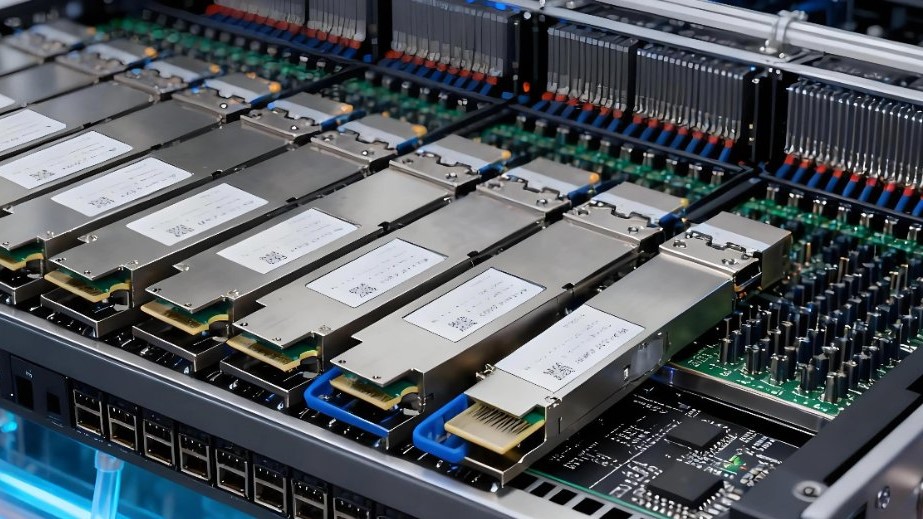
AOI signed a four-year LTA deal worth at least $2.2B, about $1.5B for 800G transceivers in 2027 and $700M for laser diodes in 2028–2029.
Optical Transceivers and Lasers, AOI $2.2 Billion Long-Term Supply Agreement