Samsung's P4 Predicament: Unraveling the Complexities Behind the Foundry Line Delay
2024-07-17
In the context of the increasingly fierce competition in the global semiconductor industry, a major decision by Samsung Electronics in the field of semiconductors has attracted widespread attention from the industry: the suspension of the foundry production line construction at the fourth factory (P4) of the Pyeongtaek campus. The underlying reasons for this decision are worth delving into.
Investment Adjustment: Responding to Business Challenges
Samsung Electronics has encountered difficulties in securing large foundry customers, which has directly affected the adjustment of its investment pace. The construction of the second phase of the P4 foundry production line, as originally planned, has been postponed, while the relatively more profitable storage production line has been given priority. This decision reflects Samsung Electronics' flexibility and strategic adjustment capabilities in the face of market changes.
Technical Defects: Production Issues and Yield Challenges
According to South Korean media reports, Samsung Electronics has encountered large-scale production defects in the second-generation 3-nanometer process, affecting the yield rate. The report points out that about 2,500 batches of wafers need to be scrapped, resulting in a loss of about 10 billion won (approximately 52.31 billion yuan). Although Samsung Electronics has denied these reports, calling them "baseless," the market's concerns about Samsung's semiconductor business have not subsided.
Samsung has adopted the GAA (Gate-All-Around) technology in the 3nm process, which is a type of gate-all-around transistor technology aimed at solving the problem of 3D FinFET technology approaching its limits. However, this new technology may bring more risks and costs, and the difficulty of the process manufacturing is not low. It is reported that the yield rate of Samsung's 3nm process Exynos 2500 chip is currently less than 20%, and it is not clear whether it can be used in the Galaxy S25 smartphone.
Order Loss: Market Competition and Customer Trust
Samsung's technical challenges not only affect its own production efficiency but also lead to the loss of important customers, and the situation of Samsung Electronics' foundry business is deteriorating. Due to the problems with the yield rate and energy efficiency of the 3nm mass production, Samsung has lost orders from major customers such as Google and Qualcomm. In particular, NVIDIA, Qualcomm, AMD, and others have chosen TSMC for foundry services, severely affecting Samsung's foundry revenue.
In addition, the low yield rate of Samsung's Exynos 2500 chip has also affected its competitiveness in the high-end smartphone market. Samsung's smartphone business has long relied on its own Exynos chips, but with the exposure of the yield rate problem, Samsung may need to reconsider its supply chain strategy.
ODM Order Strategy: Cost Control and Market Adaptation
In the field of mobile phone production, Samsung has also adopted a new strategy. According to supply chain news, Samsung has released a large number of mobile phone ODM orders, amounting to 60-70 million units, benefiting companies such as Wingtech Technology and Huaqin Technology. This indicates that Samsung is gradually adopting an outsourced design and production model in mobile phone production to reduce costs and improve efficiency.
Samsung's ODM order release strategy reflects its strategic adjustment in the face of global market competition. By outsourcing production, Samsung can more flexibly respond to changes in market demand and reduce its own production costs. However, this also means that Samsung needs to invest more effort in supply chain management and product quality control to ensure that outsourced mobile phones can meet its brand standards.
Market Competition: TSMC's Lead and Samsung's Challenge
In the semiconductor foundry market, TSMC has always been Samsung's main competitor. TSMC has performed well in the 3-nanometer process and has been able to bring significant revenue to the company. In contrast, Samsung's 3-nanometer process is currently facing yield rate issues and cannot compete effectively. Coupled with Samsung's foundry business adopting a "preemptive investment" strategy, which is to first establish manufacturing facilities and then accept orders. This strategy, although there is a risk of having to suspend production without orders, TrendForce's survey shows that Samsung's foundry sales and global market share have both declined. This is undoubtedly a major blow to Samsung's competitive position in the semiconductor foundry market.
TSMC's success is not only due to its leading technology but also its stable production capacity and efficient supply chain management. If Samsung wants to catch up in this competition, it needs to not only solve the current technical problems but also make deeper adjustments in its overall strategy.
Conclusion
Samsung Electronics' decision to suspend the construction of the P4 foundry production line reflects the dual challenges of technical defects and order loss. Faced with fierce market competition and technical challenges, Samsung needs to make more efforts in technological innovation, supply chain management, and customer relationship maintenance. By continuously optimizing its production processes and improving product quality, Samsung is expected to regain the trust and support of the market and customers in the future.
Semicon IC Electronic Parts
Email: info@semicone.com
What Is Power Management Integrated Circuits (PMIC) In Electronics ?
Convergence of AI and Bluetooth Audio SoC: Pioneering the Future of Smart Devices
Related Article

SEMICONE CHIPs curates in-demand ICs across MCUs, PMICs, discretes, clock & audio — backed by in-stock inventory, genuine, samples and obsolete-part sourcing.
SEMICONE CHIPs: Guide to Popular IC Solutions
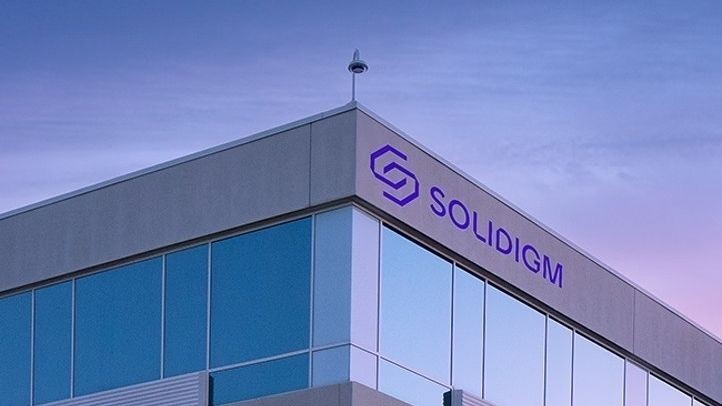
Solidigm seeks a $45B US NAND fab but ties it to approval for Dalian equipment upgrades, as export controls and a paused IPO constrain funding.
Talks on $45 Billion Investment: A Potential New US NAND Plant